We are closed from July 24 to August 7 due to the construction holiday. Request a no-obligation quote. quote with us.





NeHoBo floor
A NeHoBo floor is a concrete ground-floor system commonly found in homes built in the 1950s, 1960s, and 1970s. Many homeowners only discover they have such a floor when they're considering sustainability upgrades, insulation, or underfloor heating. At that point, the NeHoBo floor often proves to be a limiting factor. Understanding this type of floor and its implications helps in making a wise choice for the future of your home.
What is a NeHoBo floor?
A NeHoBo floor is a prefabricated concrete floor structure with hollow core elements, installed above a crawl space. The floor rests on foundation beams and forms the entire ground floor of the house. This type of floor was considered a modern alternative to wooden joists at the time.
Although the floor is structurally sound, it lacks essential properties today, such as good insulation and airtightness. Therefore, while the NeHoBo floor may still be technically sound, it often no longer meets modern living needs.
When and why were NeHoBo floors used?
NeHoBo floors were primarily used in the period after World War II, roughly between 1955 and the early 1980s. The focus then was on rapid housing construction and efficient structures. Precast concrete offered speed, uniformity, and less maintenance than wood.
Back then, energy was cheap, and comfort played a secondary role. This explains why insulation and airtightness were barely considered in the design of these floors.
What were the advantages of a NeHoBo floor?
Before that time, the NeHoBo floor had clear advantages. It was strong, relatively durable, and less susceptible to problems like wood rot. The system also provided a stable foundation for serial housing construction.
These advantages explain why this type of flooring is so widely used. However, they are becoming increasingly less important in an era where energy-efficient living and comfort are paramount.
What are the disadvantages of a NeHoBo floor?
In practice, we see that the disadvantages of a NeHoBo floor today outweigh the advantages. The floor is poorly insulated, causing significant heat loss through the ground floor. This results in a cold floor and higher energy consumption.
Furthermore, the floor isn't airtight. Drafts from the crawl space often enter the home directly, further reducing comfort. With sustainability plans, such as underfloor heating or a heat pump, the NeHoBo floor often proves to be a technical obstacle.
There are also structural considerations to consider. Age, moisture, and stress can cause cracks or signs of aging. This doesn't mean every NeHoBo floor is immediately unsafe, but it does mean that these floors are increasingly becoming a weak point in renovation projects.
Why insulation alone is often not enough
Insulating the underside of a NeHoBo floor can improve some things, but it doesn't solve the core problem. The floor remains heavy, not airtight, and is only suitable for modern systems to a limited extent. Furthermore, the options depend on the crawl space and the condition of the concrete. For homes where comfort, energy efficiency, and future-proofing are paramount, insulation often proves to be only an interim solution.
When is it wise to replace a NeHoBo floor?
Replacement is primarily considered when the home remains consistently cold, energy bills are high, or when sustainability improvements are not feasible. Even for larger renovations, changes in function, or plans for underfloor heating, replacing the floor is often the most future-proof option.
Rather than continuing to adapt to an old structure, more and more homeowners are choosing to tackle the basics properly in one go.
Replacing NeHoBo floors: why Compofloor is increasingly being chosen
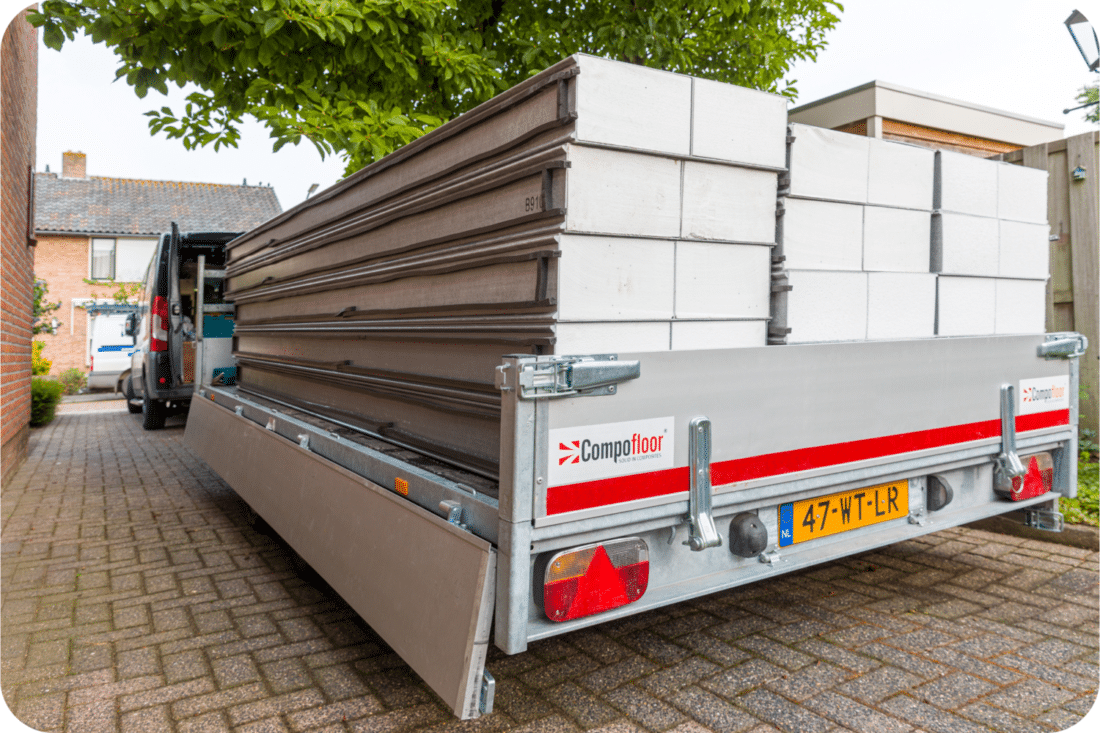
When replacing a NeHoBo floor, not every solution is suitable. Traditional concrete floors are heavy and place additional strain on the foundation, which can pose risks, especially in older homes. Therefore, a lightweight renovation floor like Compofloor is increasingly being chosen.
Compofloor is specifically designed for existing homes and replaces the NeHoBo floor without the need for heavy concrete pours. The prefabricated floor cassettes are dry-installed on the existing foundation and finished completely airtight. This eliminates drafts and heat loss from the crawl space, instantly creating a more comfortable home.
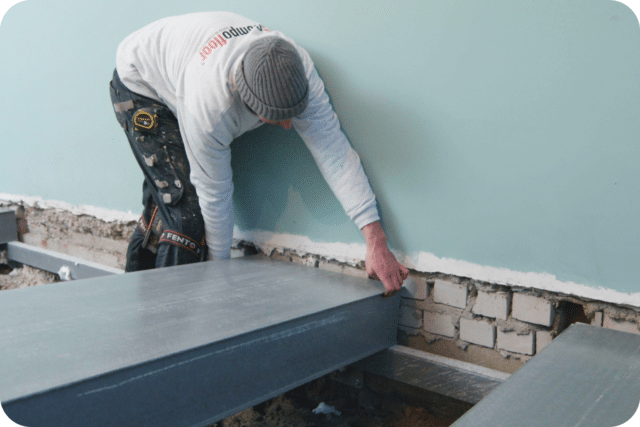
Compofloor as a modern successor to the NeHoBo floor
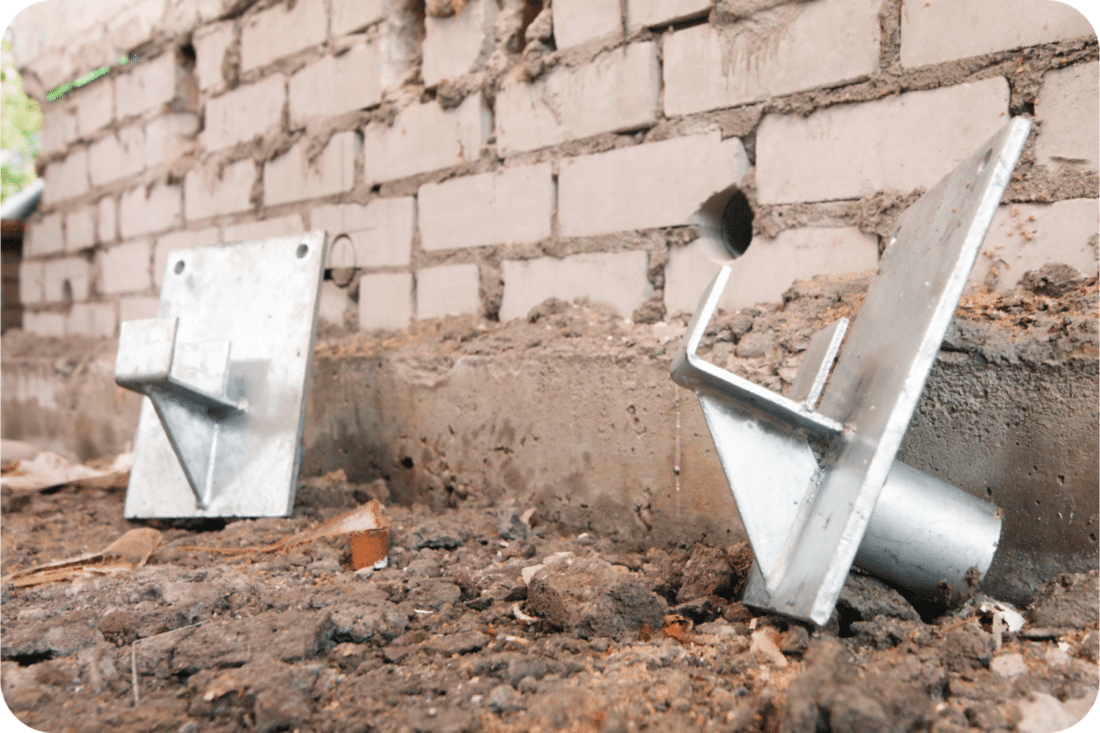
While the NeHoBo floor is a product of post-war construction, Compofloor is designed with modern requirements in mind. The floor is lightweight, strong, and has a high insulation value. Thanks to the proprietary anchor system, the load is evenly distributed across the foundation, without point loads.
Compofloor also provides an excellent foundation for underfloor heating and further sustainability improvements. The floor is low-maintenance, moisture-resistant, and immediately ready for finishing, making renovations quick and easy.
Advice on a NeHoBo floor
A NeHoBo floor doesn't always need to be replaced immediately, but in many homes, it's the biggest obstacle to comfort and energy savings. That's why a thorough assessment is essential. Compofloor examines the condition of the floor, the foundation, and the resident's future plans for each home. Based on this, we provide clear advice: improve where possible, replace where necessary, with a solution that fits the existing structure. Want to know what's best for your situation? Contact us for personalized advice or request a free quote.
What customers say about us

Frequently Asked Questions
How do you know if you have a NeHoBo floor in your home?
A NeHoBo floor is recognizable by its concrete ground floor with hollow elements, usually built between 1955 and 1980, often visible through construction drawings or inspection of the crawl space.
Can a NeHoBo floor cause cracks in the home?
Cracking can occur due to aging, settlement, or concrete rot, especially if the floor has been exposed to moisture from the crawl space for extended periods.
Why is a NeHoBo floor less suitable for underfloor heating?
Due to the lack of insulation and mass, heat is poorly retained, making underfloor heating inefficient and energy loss high with this type of floor.
Is it possible to partially replace a NeHoBo floor?
Partial replacement is technically complex and is rarely recommended, as connections often lead to thermal bridges or structural weaknesses.
What are the risks of doing nothing with an outdated NeHoBo floor?
Without adjustment, heat loss through the floor remains high, and structural problems can worsen due to age and moisture load.
How does a NeHoBo floor compare to current insulation standards?
An original NeHoBo floor does not meet the current requirements for floor insulation and air tightness as stated in the Building Decree and energy label systems.
Why are more and more people choosing replacement insulation instead of NeHoBo flooring?
Replacing the floor with a light renovation floor prevents permanent disadvantages such as draught and cold, which cannot be completely solved with insulation alone.
Yes, I want a non-binding one
receive a quote
Are you curious what it will cost for your project or at your home? Request a no-obligation quote.

